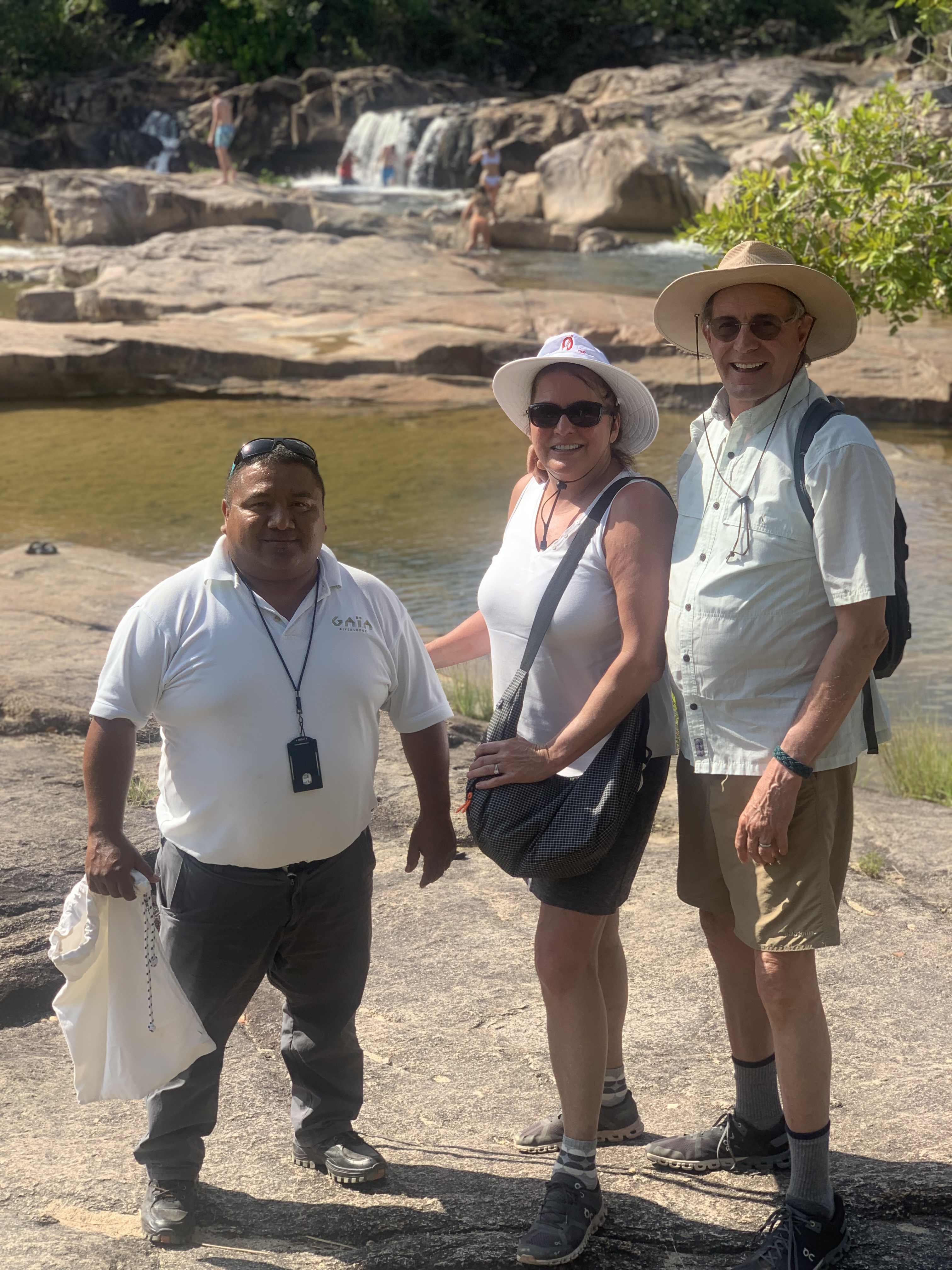
Our brilliant young Mayan guide here in Belize told us a story about working for his uncle as a teenager. He spent the day shouldering hewn logwood out of the swamp. By quitting time his sweaty shirt was stained blue. From the 16th century onwards European foresters shipped logs from this tree (hence the name logwood) to Europe for the production of indigo dye.
Precious cargo.
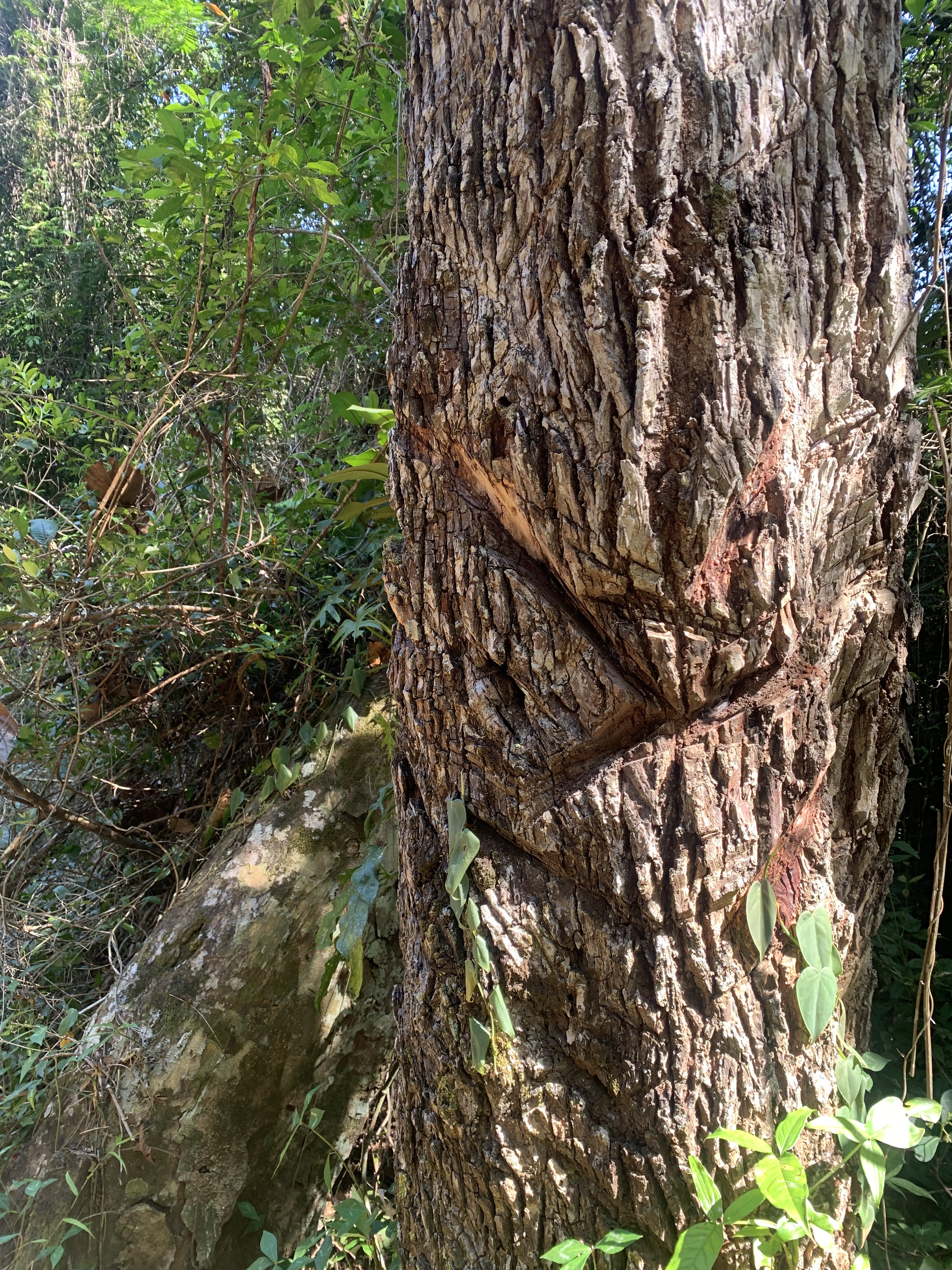
During the century preceding 1981, the British enjoyed colonial sovereignty over what was then known as British Honduras, now Belize. Why? Because they coveted the logwood as well as the gozillions of magnificent mahogany trees populating the highlands here. They sawed them down, then floated the trunks to the coast during the rainy season. Later, during the early years of the twentieth century, Americans developed an insatiable hankering for chewing gum, so the Wrigley Company of Chicago hired the natives to tap the chiquibul trees for their gummy sap, with which the Wrigleys made chiclets.

Chiquibul tree, including sap notches
Then things changed. Chemists found ways to produce indigo dye and gum more cheaply and conveniently than by grinding up imported logwood or by tapping trees in the jungle. The mahogany loggers ran out of trees to fell. The British lost interest in administering a no-longer-profitable colony in Central America. A local fellow named George Price went off to seminary, but decided halfway through to liberate his country instead of becoming a priest, and in 1981 he did it. With a little help from his friends.
Goodbye British Honduras. Hello Belize.
Some of the British legacy remains. Belize is the only country south of the Rio Grande with English as the official language (convenient for tourists like Jane and me). Loads of Belizean real estate bear English names: Georgetown, Georgeville, Hopkins, Middlesex, Mullins River, Payne’s Creek, Boston, and etcetera.
In the forty three years since independence this little country has made some smart moves. Three new hydro dams on the Mopan River provide 52% of electrical power. Solar fields are mapped out for the remaining 48%. If all goes to plan, fossil fuels will provide 0%. Well designed paved roads replace the axle-bending dirt tracks of the interior. The forestry department monitors mahogany harvesting and requires logging companies to plant two new trees for every one taken. No more clear cutting. Belize now maintains huge swaths of virgin jungle in protected preserves dotted with eco resorts providing income and employment. Land rovers rumble around bearing folks like us to subterranean rivers, swimming holes, and the many Mayan ruins where archeologists have hacked away a millennium worth of jungle to expose the stories-high magnificent temples and roads and canals and dwellings beneath. When you step into a massive sunlit clearing dominated by these elaborate symmetrical structures of worship and regal power you might be silenced by awe.
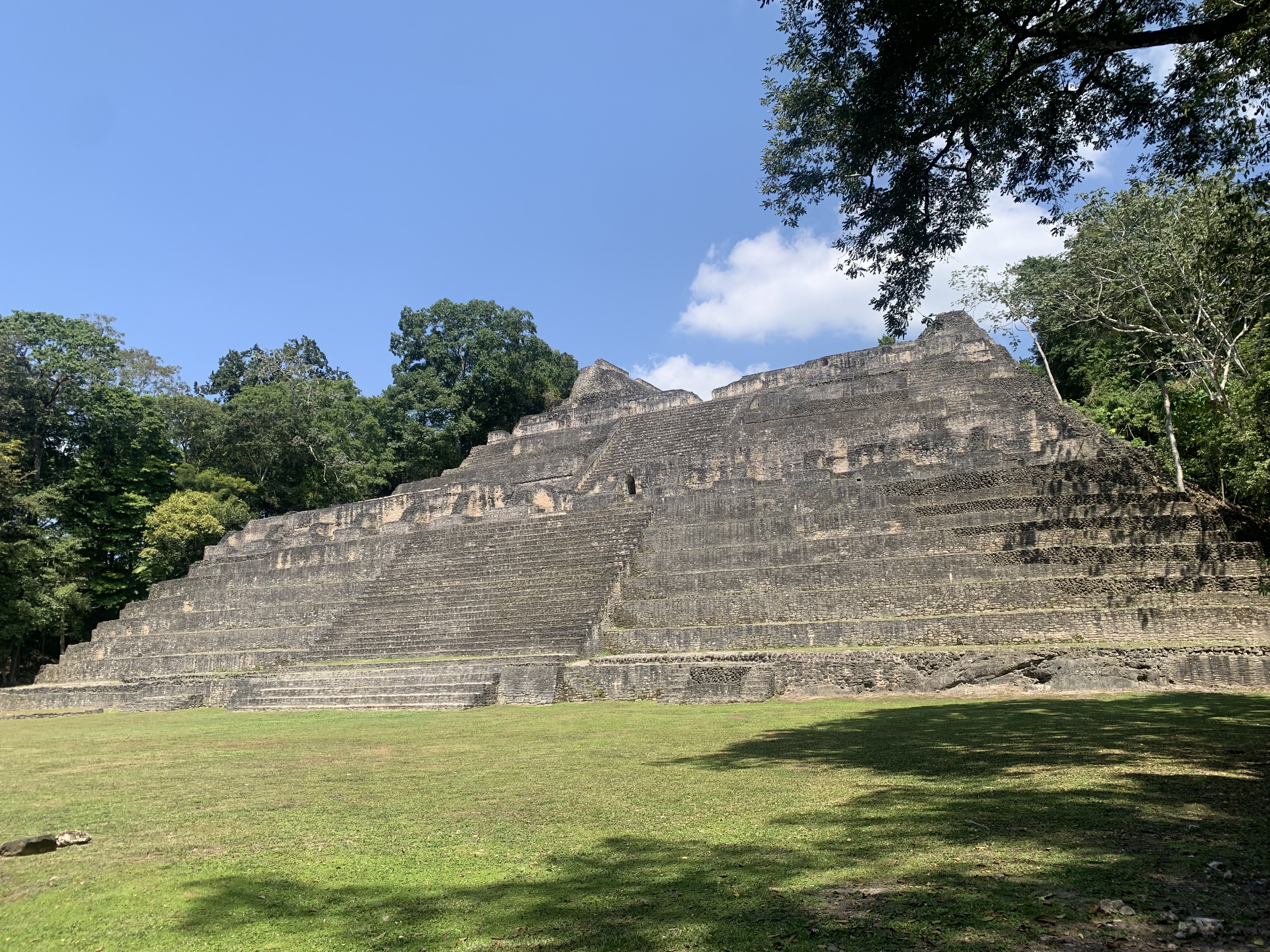
Before the mysterious collapse of the Mayan civilization 1,000 years ago (drought? peasant revolt? invasion?) they learned to predict eclipses of the sun and moon, to integrate zero into their mathematics, and to knit their empire together with paved roads. Nowadays airplanes equipped with lidar (Light Detection and Ranging) which “sees” through the vegetation to the rock structures beneath, survey the jungle to image edifices the human eye cannot detect from ten feet away. This hillock here, crowned with massive trees and spider monkeys and understory, cloaks an ancient building. One of thousands.
So, yes, the Mayans developed a sophisticated and complex advanced society, but also maintained harmonic exchange with the natural world around them. Our brilliant guide, Rick, showed us plants that cure indigestion, serve for birth control, counteract the deadly venom of the fer-de-lance snake, and ease the agony of stinging nettle. He showed us a leaf cutter ant hill and its path worn into the forest floor by many millions of ants marching to and fro. Leaf cutter ants are strictly nocturnal, but sense barometric pressure so forage out at day when the pressure lowers. When the Mayans saw ants on their ant highways in daytime they knew rain was coming, as did the ants.
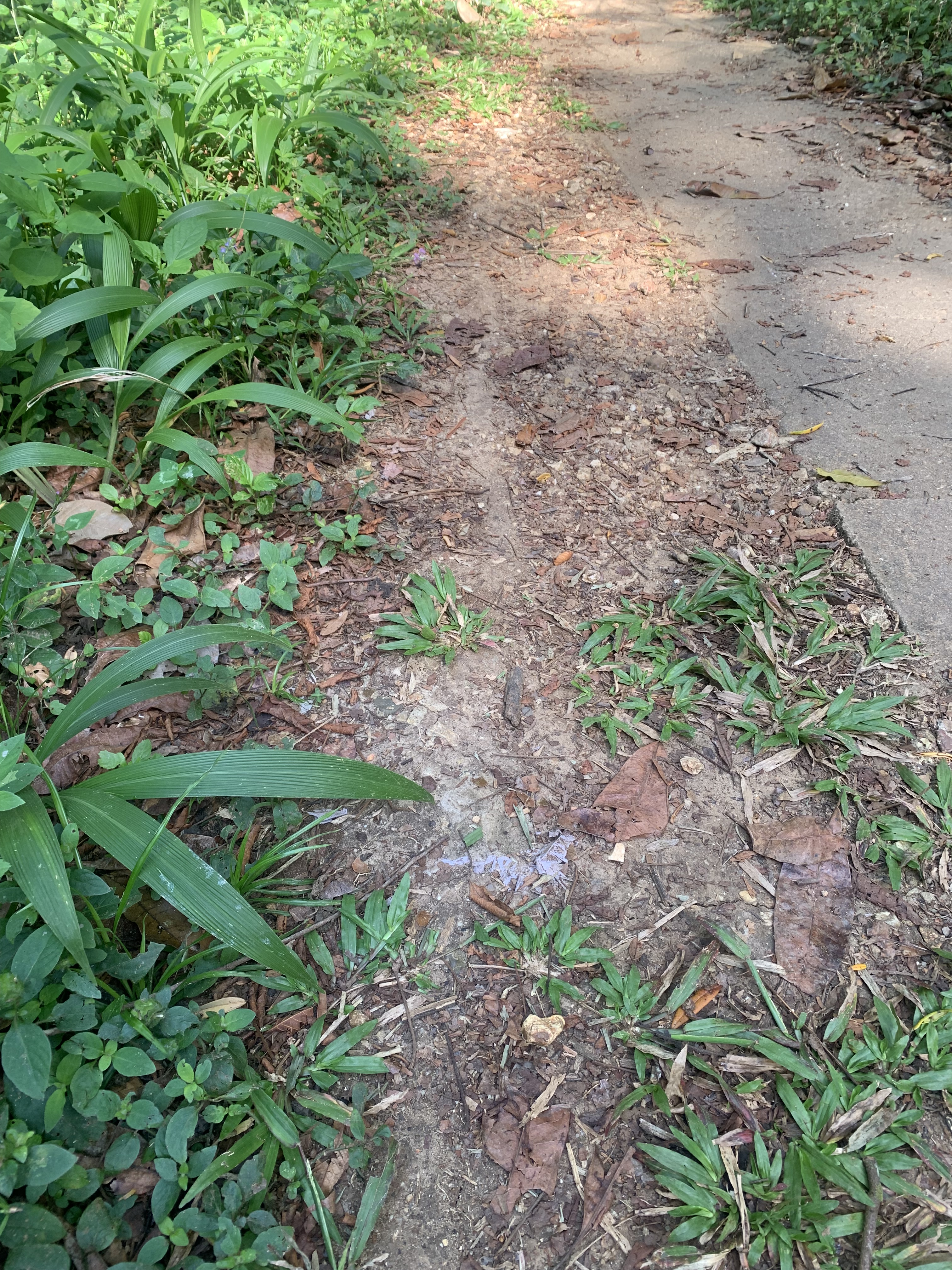
Ant Highway
I suspect my eight-year-old grandson, Jack, will snort and guffaw when I show him my picture of the horse balls tree. The white substance inside its fruit is as adhesive as Elmer’s Glue. I applied some between thumb and forefinger. Yup. That’s glue.

Horse Balls Tree
You may be thinking by now that the Belize Tourism Agency paid me to write this blog, and you’re not far off if you do. In addition to all that cool Mayan stuff, Belize sports a delightful coastline and scores of cays where you can snorkel with the fishes or sit on a sandy palm-shaded porch looking out at the surf crashing over the reef as I am doing at this very moment.
Sweet.
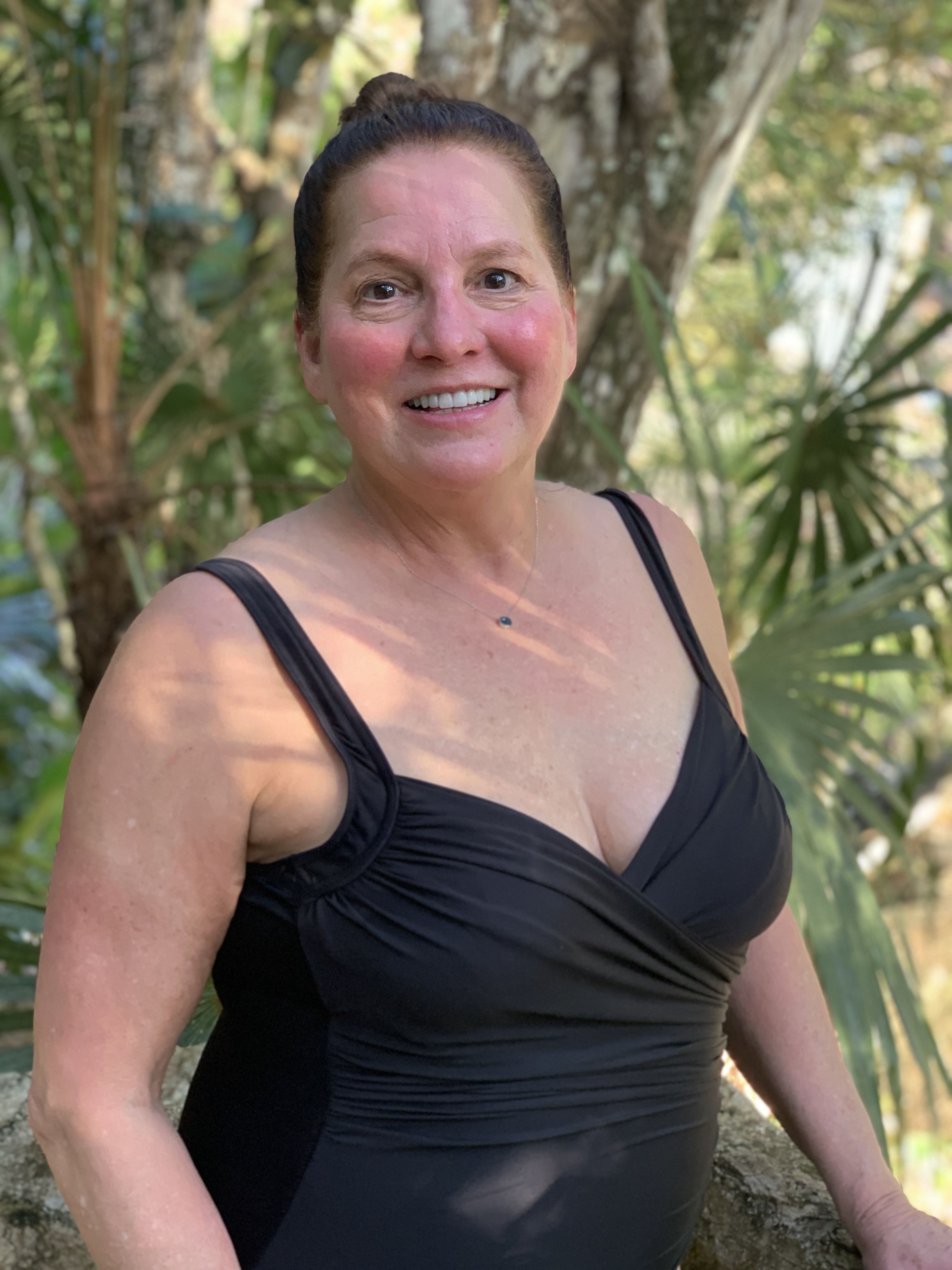
One last thing. Some of you with photographic memories may recall an earlier blog from Australia which included a photo of a Mossman River Nymph. Sonovagun, she somehow teleported here to the jungle of Belize.
Sweet.


Sweet!
LikeLike
Beautifully done, as always. Please tell me all of these will be published somewhere sooner than later.
LikeLike
great reading thanks Dad!
LikeLike