Remember when you were a kid those many long decades ago, and how proud you felt when you learned that the most populous city on earth was our very own very grand New York City? The Empire State Building. The Statue of Liberty. The Brooklyn Bridge and the Chrysler Building and Central Park and Broadway and Grand Central Station and Macy’s Thanksgiving Parade and the Staten Island Ferry. Man! The biggest and the best . . . that’s us! Other euro/American heavyweights populated the 1950’s era top ten. London at #2. Also Rhine-Ruhr, Moscow, Paris and Chicago. The second decile included Los Angeles, Leningrad, Philadelphia, Berlin, and Detroit!
Times have changed. New York fell out of the top ten a quarter of a century ago, replaced by such behemoths as Dhaka, Tokyo, Delhi, Shanghai, Manila, and Mumbai. But what urban conglomeration holds the heavyweight title these days, dear friends? You,got it. None other than the capital city of Indonesia — Jakarta, tipping the scales at 42 million souls. And here’s the weird thing: Jakarta failed the 2010 top ten altogether. Since then it has swole up like a water balloon on a garden hose as Indonesia’s rural poor decided to try their luck in the big city.
Familiar story. But who can blame them? Rice farming requires endless hours of stoop work knee deep in paddy mud, and pays approximately diddly. So the young bid adieu to Mom and Dad, and to their fuddy ways, for the opportunity to earn enough to buy one of those snappy motor scooters displayed on the screens of their iPhones.
Jakarta stretches to the hazy horizon in every direction. Its thirsty population drills wells into the substrata at an astonishing rate, and, oops, now finds that the landscape will soon settle below the proximate seascape. The short term solution: dikes. The long term solution: move the capital to neighboring Borneo. Plenty of groundwater over there!
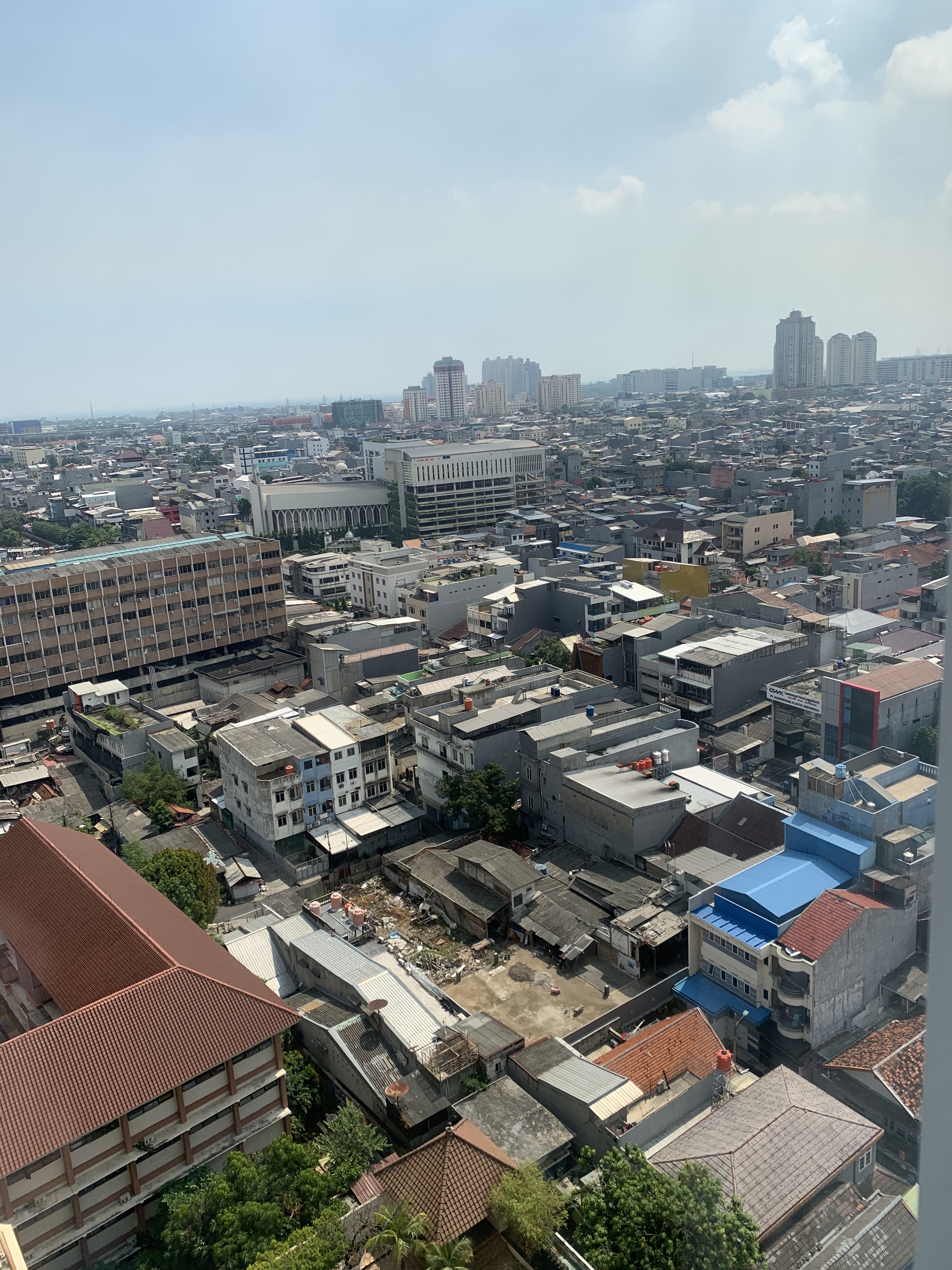
Indonesia. Just why is it that we know so little about Indonesia— far less that we know about her neighbors (Japan, China, India, Singapore, Australia, New Zealand)? Yes it is many time zones away from us, but so are Greece and Egypt. Maybe it has something to do with Indonesia’s status as an archipelago instead of one contiguous land mass. 17,000 islands for goodness sake, plus scores and hundreds of tribal groups, each with its local dialect incomprehensible to the neighbors. Parenthetically, how do you govern such a place? But, Jeez, after India and China and us, it has the fourth most people on earth, among them more Muslims than anywhere else. Still, Indonesia remains a mystery to us, and the only way to penetrate that enigma is to hop a plane and help deplete the water table, as we recently did.
Jakarta perches on the northwest corner of Java. Immediately upon landing there from your endless trans Pacific flight, stroll on over to the domestic terminal for your connecting flight to Bali, just off the eastern tip of Java.
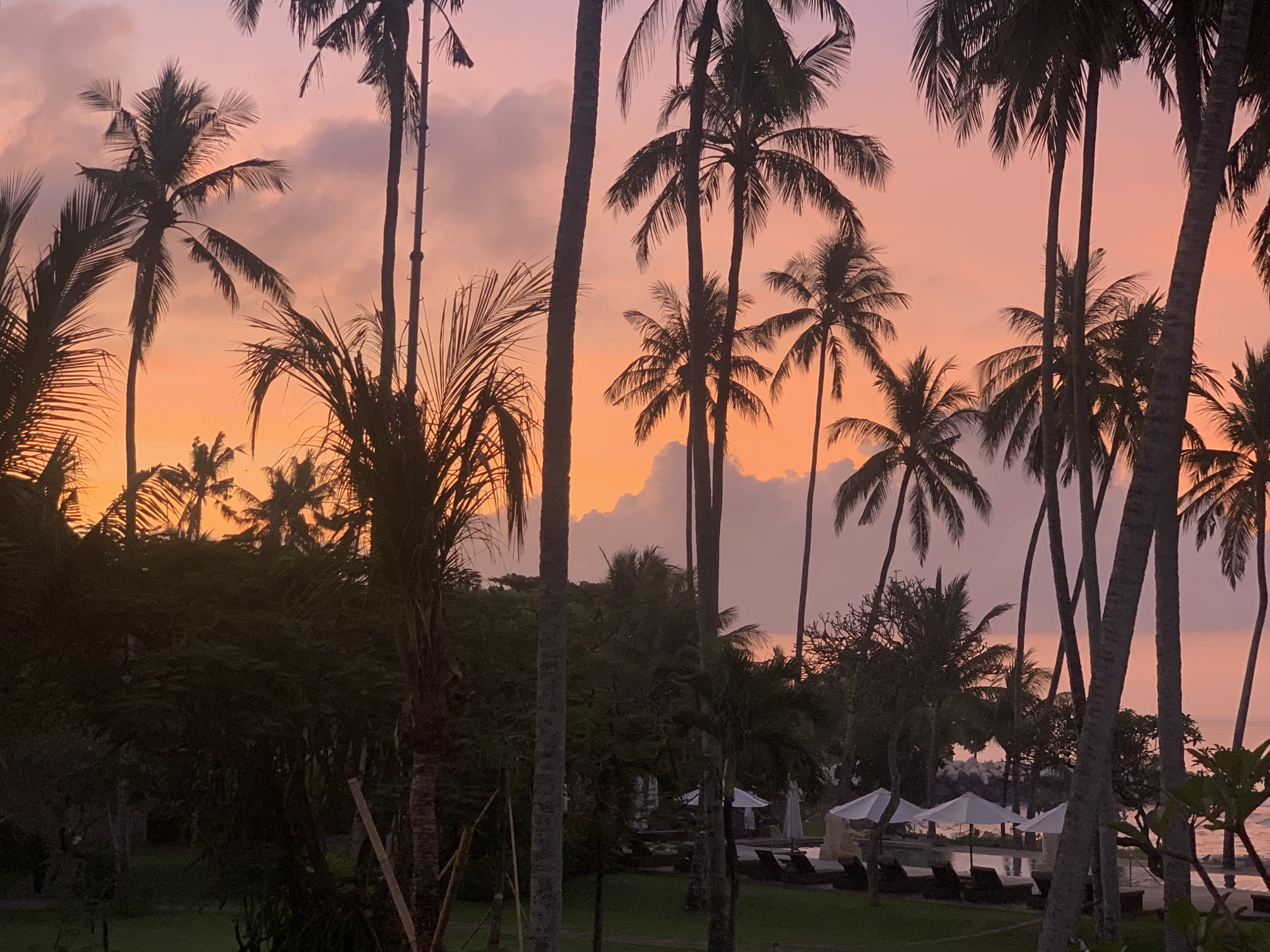
Ah, Bali. You hold a mystic allure for us, Bali, floating there green and lush under the cloud rack at the top of the Indian Ocean, the only Hindu island among 17,000, so blessed with shrines in every room and chamber and rice paddy and populated with gentle tan people in flip flops and sarongs. A century ago some German artists stumbled in, and their paintings represented the thin edge of the wedge when they reached European eyes. Hortense, my dear, we simply must go see this place. And so we came. Trickles of pilgrims until WWII concluded, then some surfers and hippies, then a tidal wave of beer-loving blond people from neighboring Australia, then spacious luxury hotels ranked along the strands. Some of us drove inland a ways to the town of Ubud where Balinese craftspeople fashion wondrous crafts to charm the rupia out of our pockets: wood carvings, stone carvings, jewelry, batiks. And finally, fifteen years ago, the thick edge of the wedge, Julia Roberts and Antonio Banderas starring in Eat, Pray, Love.
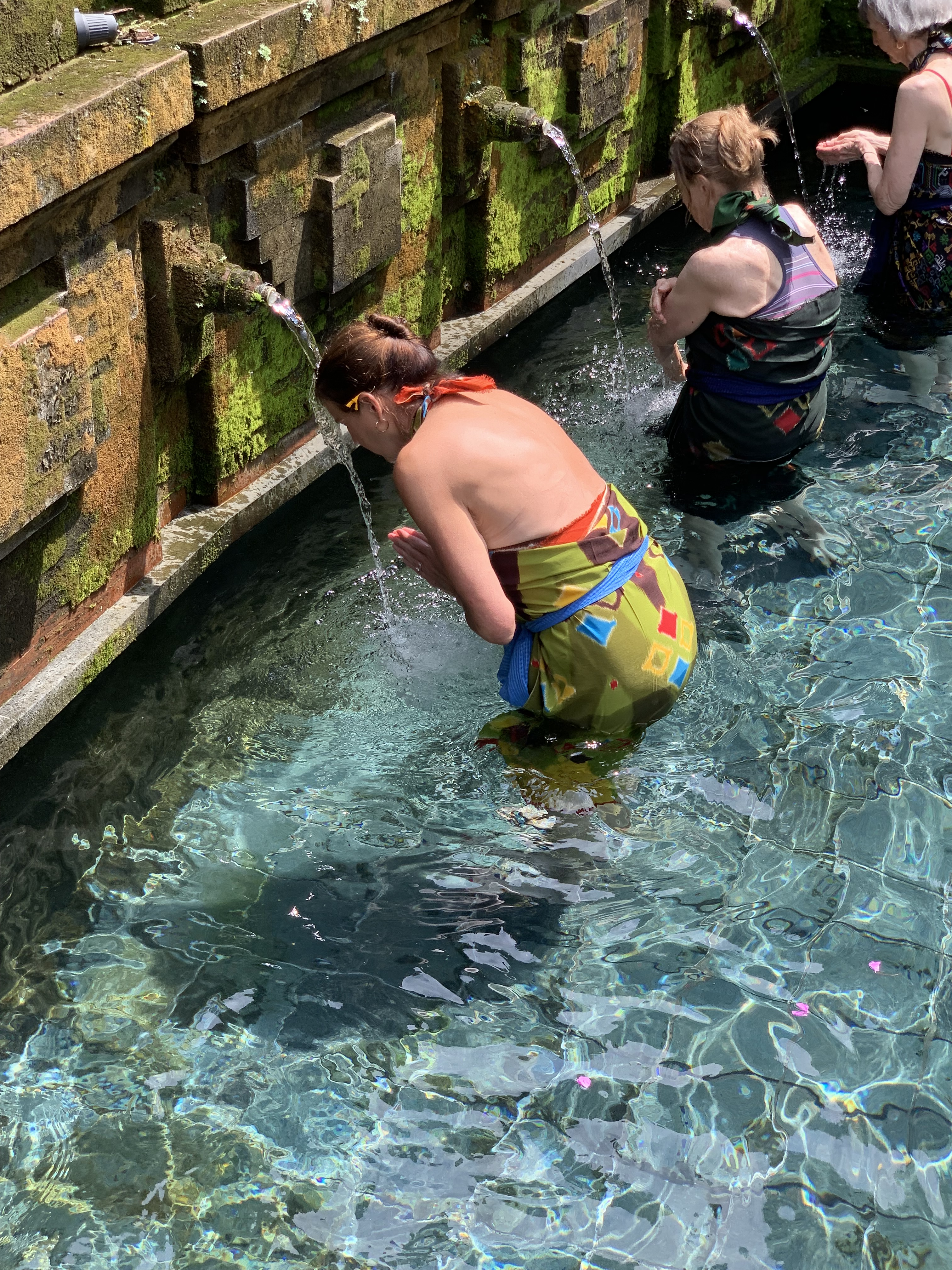
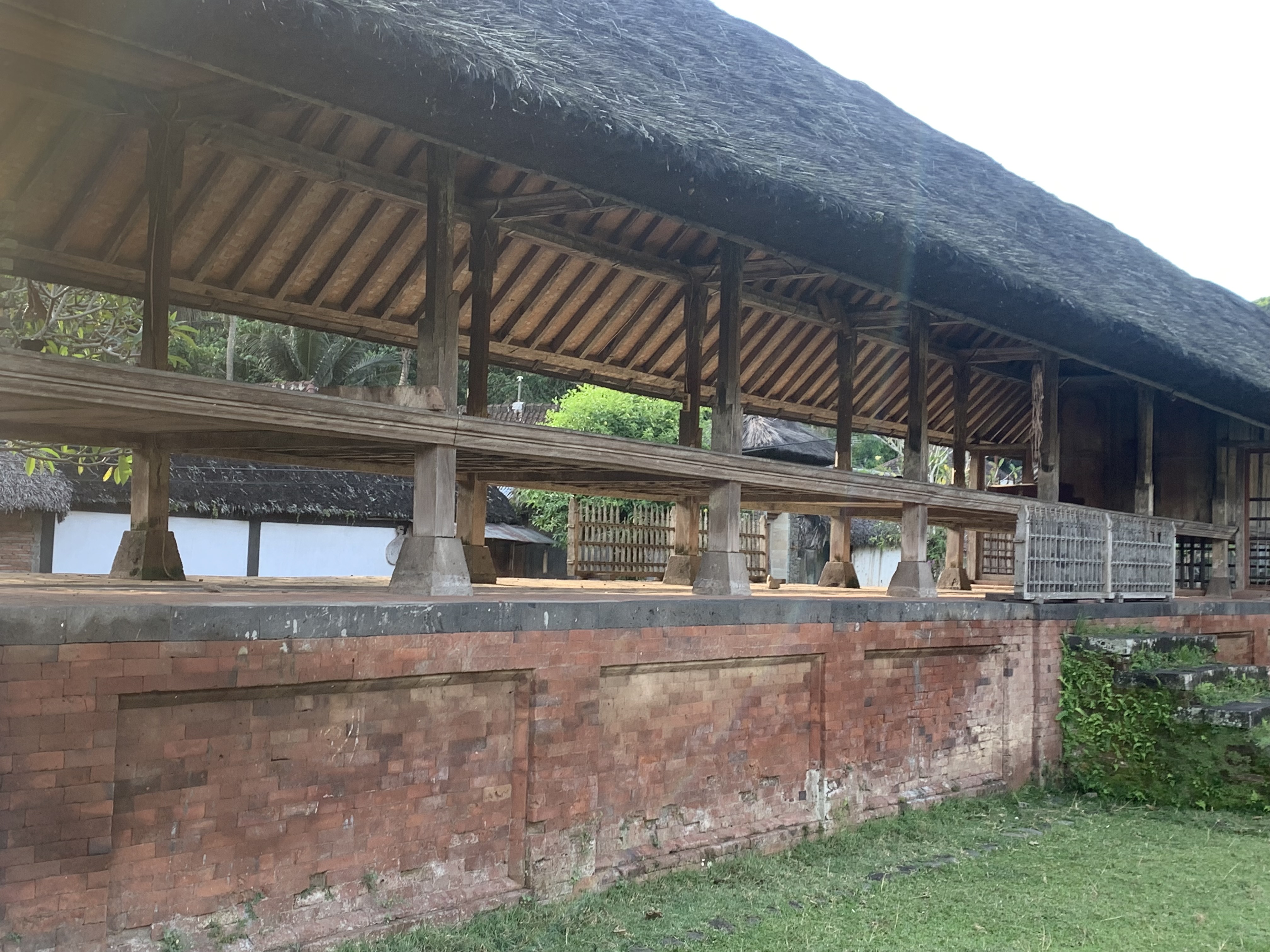
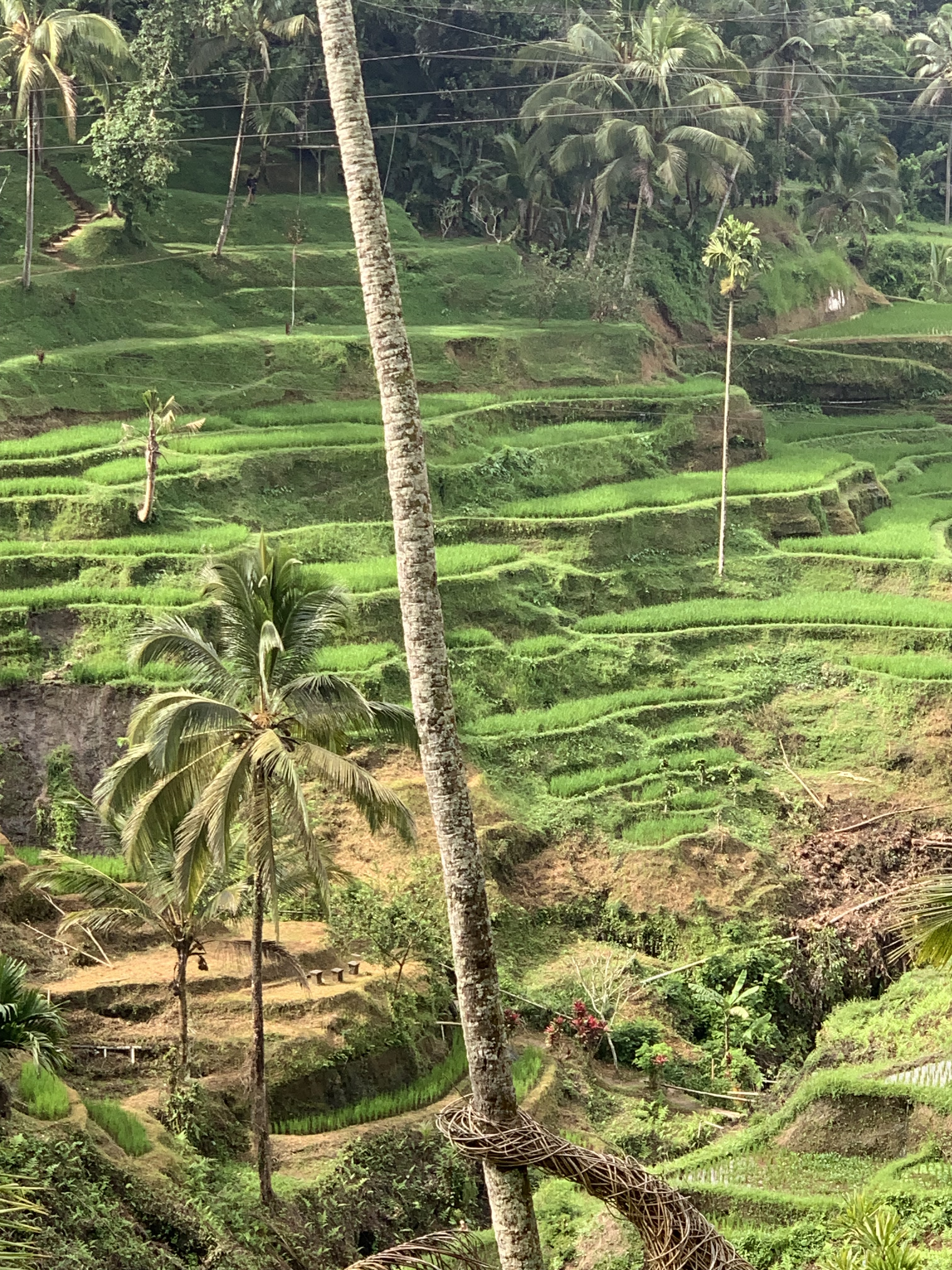
Nowadays scooters and cars clot the streets of Ubud, and you need and expert guide to steer you to such scenes of visionary wonder as still remain: sinuous ranks of rice paddys laddering up the hillsides; remote villages where the old ways persist; a spring fed pool where you can purify yourself under jets of holy water.
Sweet.